euangelion.AI executive · 28 October–9 November
Edition
36 stories
Artificial intelligence / Model economics2 Nov

Anthropic’s quarterly revenue rises 47%, but its operating result turns negative

Anthropic’s amended IPO filing reports $16.956 billion of Q3 revenue and a $567 million operating loss, with future compute commitments carrying a different scale and timetable.

Anthropic Q2 and Q3 2026, respectively: revenue $11.555B and $16.956B; GAAP operating income +$0.974B and loss −$0.567B. Each is a three-month period. Revenue and operating result use separate scales. Unaudited; neither operating result nor commitments is cash burn.

Growth without an operating profit

Revenue rose 47% from Q2; the operating result turned negative.

GAAP operating income / loss

US$ billion
Q2 2026+$0.974B
Q3 2026−$0.567B

Recognized revenue

US$ billion
Q2 2026$11.555B
Q3 2026$16.956B

Unaudited three-month results. Operating result is not cash flow; future commitments are outside this comparison.

3 sources
THE EDITION

AI executive · 28 October–9 November

36 stories found
05

Artificial intelligence

New tools, considered

28 stories
Research acceleration

METR finds faster AI research at Anthropic, with important evidence still private

METR estimates that growth in Anthropic’s internal capability index accelerated 1.9 times, but the cause and the most informative supporting evidence remain partly uncertain or private.

Read 2 sources · 1 min

A 1.9× point estimate and 1.5–2.8 interval on a zero-to-three scale, with a separate 1× historical reference.

Growth in Anthropic’s capability index

multiple of earlier growth rate

METR’s observed index-growth comparison

Since October 2025 versus earlier trend

× earlier growth rate
Estimated acceleration1.9× · 95% CI 1.5–2.8

Bounds: 1.5–2.8 × earlier growth rate

Earlier growth rate1× reference

Point estimate; no bounds shown.

95% confidence interval for index growth; not a causal AI effect or individual productivity.

Cloud economics

Cloud sales accelerate while the infrastructure bill draws down cash

AWS, Azure and Google Cloud reported strong September-quarter revenue growth, but company-wide cash flow and future capacity obligations show why cloud sales alone cannot establish the return on AI spending.

Read 7 sources · 1 min

AWS revenue grew 39.3% to $46.0B, Azure 48% to $33.165B, and Google Cloud 103% to about $30.7B in the three months ended September 30, 2026. Bars share a zero-to-110-percent scale. Business scopes differ and include non-AI; Google Cloud includes TPU-system sales. These are not market shares.

Cloud revenue grows from different bases

September-quarter growth within each disclosed business.

Quarter ended September 30, 2026

Year-on-year revenue growth, %
AWS39.3%

$46.0B recognized revenue

Azure48%

$33.165B recognized revenue

Google Cloud103%

About $30.7B recognized revenue

Year-on-year reported growth. Scopes differ and include non-AI; Google Cloud includes TPU-system sales. Not market shares.

Migration deadline

Conductor Cloud users must export before November 20

Conductor says its cloud service will become read-only November 13 before shutdown and deletion begin November 20, while OpenAI separately announced an agreement to acquire Pierre’s developer tools.

Read 4 sources · 1 min

A proportional November 4–20 timeline marks November 9, November 13 read-only and November 20 shutdown/deletion. An export window spans the period before shutdown.

Export before November 20

Cloud enters read-only mode November 13, then shuts down and begins deletion November 20.

Cloud writableUntil Nov 13
Read-only cloudNov 13–20
Nov 4Nov 20 · shutdown / deletion

Calendar dates only; no cutoff time or timezone was published. Finish before November 20.

Hosted or downloadable

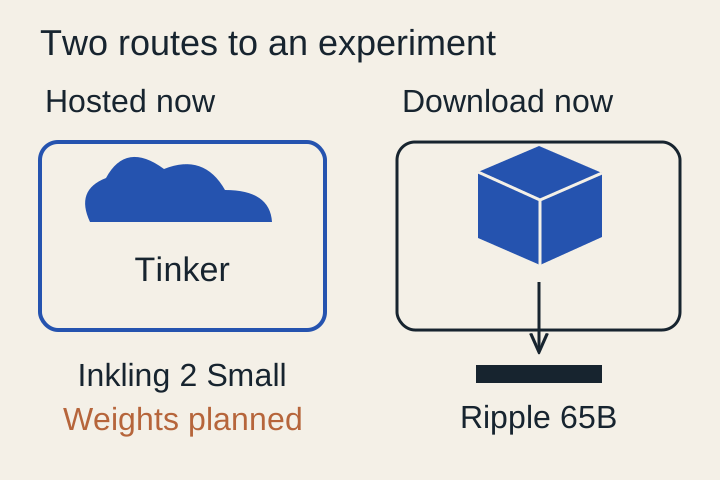
Inkling 2 Small opens on Tinker; Ripple offers downloadable coding weights

Thinking Machines launched Inkling 2 Small through Tinker with weights still planned, while Ricursive’s Apache-2.0 Ripple-65B Preview offers an immediately inspectable alternative for self-hosting experiments.

Read 5 sources · 1 min
Inkling’s model sits inside a Tinker enclosure; Ripple’s checkpoint has a downward download arrow. Inkling weights are labelled planned.
Inkling 2 Small is available through Tinker while its weight release remains planned. Ripple-65B Preview already provides Apache-2.0 weight artifacts for self-hosting experiments.
Enterprise authority

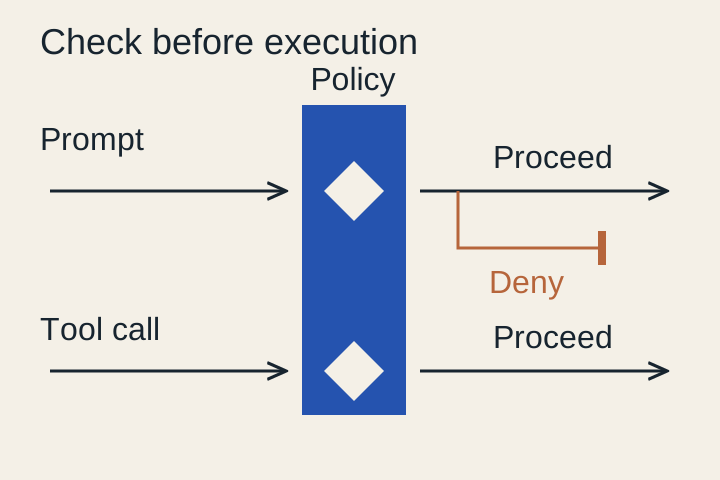
Claude adds policy checks before prompts and tool calls run

Claude Enterprise’s inference hooks are generally available, while its security center and centralized management remain beta and sign-out does not revoke running cloud work or API keys.

Read 6 sources · 1 min
Prompt and tool-call paths pass through a blue policy checkpoint. One denied branch ends at a stop bar; permitted paths continue.
Inference hooks connect prompts and pre-tool calls to an organization’s policy checks before supported activity proceeds. The separate security-center report is a configuration assessment, not certification.
Agent infrastructure

Agent APIs reduce session overhead without making context free

Claude message threads reduce repeated context uploads without reducing token accounting, while OpenAI’s Agents API adds mutable tools, background compaction and separately billed automatic review.

Read 5 sources · 1 min
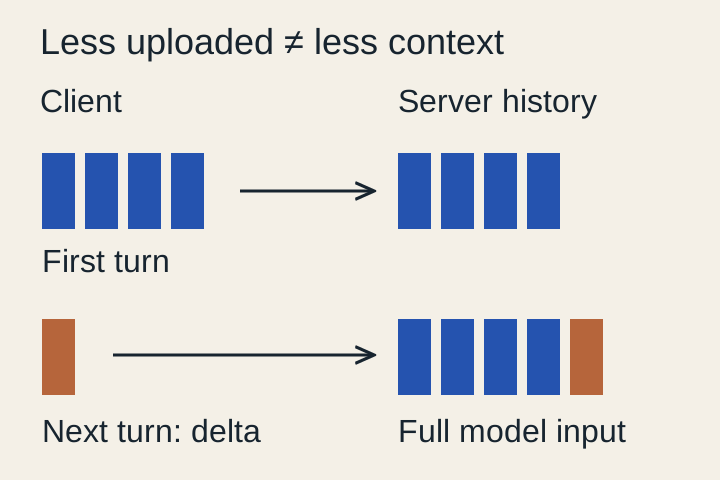
First turn uploads four context blocks. The next uploads one new block, which joins all four stored blocks before the model reads the full conversation.
Claude threads upload the conversation once and send only additions on later turns. The model still receives the reconstructed full context and token pricing is unchanged; the block counts are illustrative.
Long-context reliability

StateBench shows why remembering updates is harder than retrieving facts

Ai2’s StateBench finds that four tested frontier models can retrieve simple facts yet fall to 13% accuracy or less on the longest dependency-heavy state-tracking sequences.

Read 3 sources · 1 min
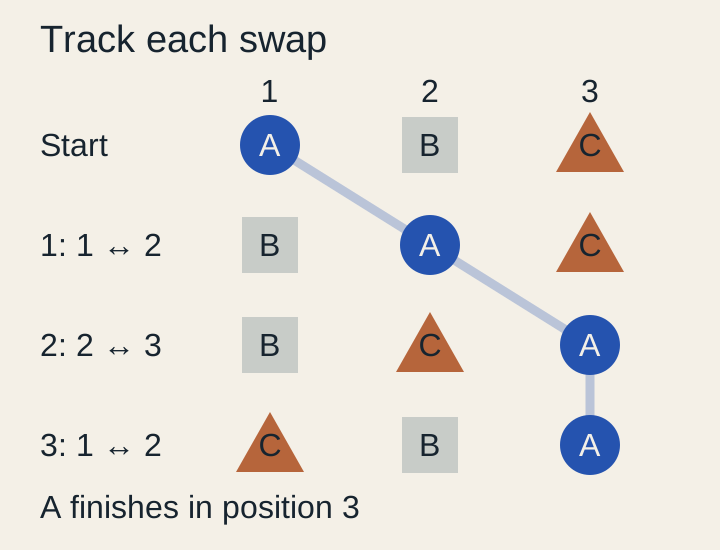
Four rows show A, B and C across three positions. Swaps 1–2, then 2–3, then 1–2 leave C, B, A. A’s path is traced in blue.
Following dependent changes requires carrying earlier state forward. In this original three-object example, three swaps move A from position 1 to position 3; it illustrates the mechanism rather than a scored StateBench item.
Decision quality

A revised decision-model index penalizes misplaced confidence

Artificial Analysis’s Decision Index v2 adds document-level completion and calibrated confidence to the buying question, showing why per-answer accuracy and token price alone are incomplete measures.

Read 3 sources · 1 min

Four bars on a 0–100 scale: wrong at 90% confidence 9.5, wrong at 60% 32, right at 60% 92, right at 90% 99.5.

Confidence changes the cost of being wrong

The Decision Score combines correctness and confidence.

Illustrative decision scores

points out of 100
Wrong at 90% confidence9.5
Wrong at 60% confidence32
Right at 60% confidence92
Right at 90% confidence99.5

Calculated examples using 50 × (1 + c − (p − c)²); no measured model results.

Inspecting team agents

DeepSeek’s team-agent prototype puts authorization in the host

DeepSeek’s public super-agent prototype turns authorized GitHub or Feishu requests into separate work items, with host-enforced permissions and an explicit warning that it is research code.

Read 3 sources · 1 min
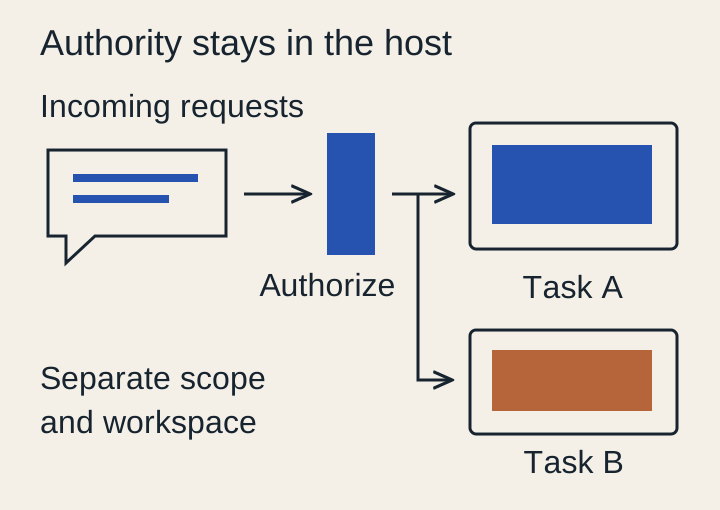
Incoming request bubbles reach a host authorization gate, then branch into two separate task workspaces with distinct scopes.
DeepSeek’s prototype admits work through host-enforced authorization and separates each work item’s session and directory. Later conversation can add context without enlarging its authority.
Specialist deployment

PLaMo releases Japanese-focused translation weights in four sizes

Preferred Networks released PLaMo 3 Translate in 0.8B, 2B, 8B and 31B sizes, offering a practical local translation option with conditional commercial licensing.

Read 2 sources · 1 min

Four blue horizontal bars on a common zero-to-31-billion-parameter scale: 0.8, 2, 8 and 31 billion.

Four sizes for local translation

PLaMo 3 Translate spans 0.8B to 31B parameters.

Released model sizes

billion parameters
PLaMo 0.8B0.8B
PLaMo 2B2B
PLaMo 8B8B
PLaMo 31B31B

Parameter counts are not translation-quality scores or memory requirements.

Speech workflows

NVIDIA makes transcription style selectable for each recording

Nemotron 3.5 Transcribe offers downloadable speech-model weights and per-request control over transcript conventions, including speaker labels and timestamps that do not establish a speaker’s real identity.

Read 2 sources · 1 min
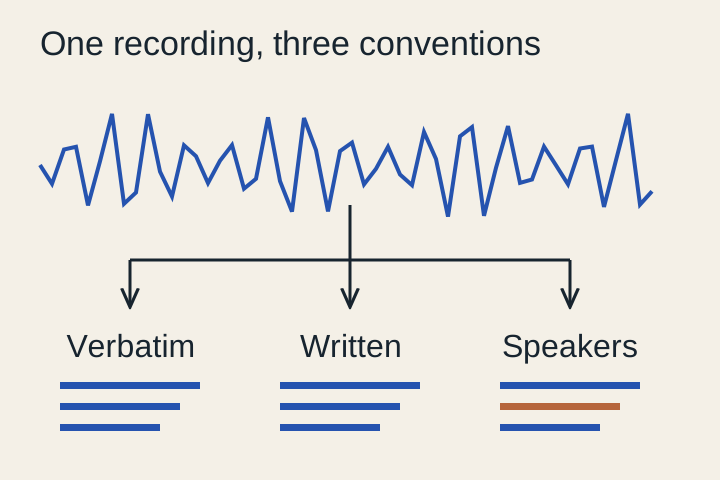
One schematic waveform branches to three differently marked transcript paths labelled Verbatim, Written and Speakers.
A request can select verbatim, written-form or speaker-attributed transcription from the same recording. Speaker labels distinguish turns within that audio; they do not identify a real person.
Security operations

AI vulnerability findings make remediation the next bottleneck

Anthropic’s November 2 ledger records 5,087 disclosed findings and 629 known patches, while a separate n8n advisory gives workflow operators a concrete isolation vulnerability to fix.

Read 4 sources · 1 min

A proportional ring distinguishes 629 known patched from 4,458 with unconfirmed patch status. It does not measure installed upgrades.

Known patch status

disclosed findings

Anthropic disclosure ledger, November 2

5,087 disclosed findings

findings
  • Known patched629
  • Patch status unconfirmed4,458

Whole: 5,087 findings

Cumulative disclosures; unconfirmed status is not proof of no patch. An upstream patch is not installed fleet coverage.

Public security

The UK budgets for agent security as cyber scenarios grow more demanding

The UK’s October 28 Budget commits £40 million to a National Agentic Security Unit and an additional £120 million to the AI Security Institute, while NCSC’s new cyber scenarios stress uncertainty about future attacks.

Read 3 sources · 1 min

Two bars share a pounds-million scale: 40 for the agentic unit and 120 additional for AISI. These are distinct commitments with different stated time scopes.

UK security funding commitments

£ million

October 28 Budget

Distinct funding commitments

£ million
National Agentic Security Unit£40m
AI Security Institute£120m additional

2026–27 through 2029–30

Commitments, not spending or measured effectiveness. AISI funding spans 2026–27 to 2029–30; no identical period is asserted for the unit.

Enterprise adoption

AI budgets expand faster than many companies can explain their unit costs

Menlo estimates a $176.8 billion annualized enterprise-AI deployment market, while Deloitte finds only 44% of surveyed organizations track per-unit inference costs; neither result proves investment returns.

Read 5 sources · 2 min

Deloitte surveyed 3,500 AI-involved leaders across 25 countries in May–June 2026. 71% report tracking total inference/API spend, 44% cost per inference unit. Bars share a 0–100% scale. Separate questions do not establish a nested subgroup or causal economic return.

Knowing the bill is not knowing unit cost

Deloitte respondents report less visibility into per-unit inference costs.

Organizations represented in the survey

Respondents, %
Track inference / API total71%
Track per-unit inference cost44%

3,500 leaders in 25 countries; May–June 2026 survey. Separate questions, self-reported practices; not a causal ROI result.

Chips and licensing

AMD’s data-center sales nearly double; Arm’s faster growth comes from licensing

AMD reported 97% growth in data-center revenue, while Arm’s license and other revenue grew 50% and royalties 8%, showing distinct routes from AI demand to recognized sales.

Read 4 sources · 1 min

AMD data-center revenue grew 97%, from $4.341B to $8.546B. Arm license/other revenue grew 50%, from $515M to $773M; royalties grew 8%, from $620M to $670M. Rates compare each business with its own year-earlier quarter. AMD includes CPUs and accelerators; Arm royalties use estimates of customer shipments. Not a GPU market-share chart.

Three routes from demand to revenue

AMD hardware revenue nearly doubled; Arm licensing grew faster than royalties.

September 2026 quarterly results

Year-on-year revenue growth, %
AMD data center97%

Mixed hardware: CPUs, GPUs and other products

Arm license and other50%

IP and other contractual revenue

Arm royalties8%

Linked to customer product shipments; estimated

Within-company year-on-year growth. AMD quarter ended September 26; Arm September 30. Different revenue models, not market shares.

Sovereign AI capital

Canada commits staged equity as Cohere targets a C$7 billion round

Cohere announced an initial Series E close targeting up to C$7 billion, with Canada committing up to C$1.6 billion in staged equity; neither figure establishes cash already received.

Read 3 sources · 1 min

Cohere’s Series E targets up to C$7B. Canada announced up to C$1.6B of staged equity within that financing. Both bars use the same C$0–7B scale; the total target is hollow and government commitment hatched. Neither mark represents disclosed cash already received; initial close amount is unknown. C$35.7B valuation is not plotted as funding.

Announced ceilings, not cash received

Cohere targets up to C$7B; Canada plans up to C$1.6B in stages within the round.

Cohere Series E · October 29

C$ billion
Total round target, up toC$7B

Target for the round, not disclosed cash received

Canada equity, up toC$1.6B

Staged investment within the round

Initial close amount is undisclosed. These are a financing target and a maximum staged commitment; C$35.7B valuation is a separate quantity.

Physical AI

Shield agrees to buy Echodyne, tying autonomy to radar

Shield announced an Echodyne acquisition worth up to $5.3 billion and $2.5 billion of supporting financing, with closing expected in early 2027 and part of the purchase price contingent.

Read 3 sources · 1 min

Acquisition up to $5.3B comprises $4.8B at closing and up to $0.5B contingent. Announced $2.5B financing comprises $1B Series H equity, $1B structured equity, $0.5B debt. Each strip is normalized to its own total, not a common dollar length. Early 2027 closing is conditional; the separate $28.8B company valuation is not part of either total.

Purchase price and financing are separate

A conditional acquisition price and a mixed financing package describe different totals.

Acquisition value, up to US$5.3B

US$ billion
  • At closing: cash and equity$4.8B
  • Contingent maximumUp to $0.5B

Whole: 5.3 US$ billion

Announced financing, US$2.5B

US$ billion
  • Series H equity$1.0B
  • Structured equity$1.0B
  • Debt$0.5B

Whole: 2.5 US$ billion

Each strip shows its own total. Announced agreement; early 2027 closing remains conditional. Valuation is not included in either strip.

06

Biotechnology × AI

At the edge of what we know

6 stories
Evaluation

Biology benchmarks expose gaps between plausible answers and completed work

Four recent benchmark releases or updates report substantial failures on regulatory, antibody-development, rare-disease and surveillance tasks, but their different task sets cannot be read as one clinical performance ranking.

Read 9 sources · 1 min

Four separate strips: LifeSci Diamond, 16 of 55 tasks; TxBench, 39.4% of attempts on 60 tasks; RareDiseaseBench, 43.8% of attempts on 35 cases; BioSecBench, 25.5% of attempts on 110 tasks. Each Latch study uses three attempts per task; these are not pass-at-least-once rates.

Four distinct biology evaluations

task or attempt pass rate

Best reported configuration within each study

LifeSci Diamond · 55 regulatory tasks

% tasks passing
Best reported configuration16 of 55 tasks

TxBench · 60 tasks · 3 attempts each

% attempts passing
Best reported configuration39.4% of attempts

RareDiseaseBench · 35 cases · 3 attempts each

% attempts passing
Best reported configuration43.8% of attempts

BioSecBench · 110 tasks · 3 attempts each

% attempts passing
Best reported configuration25.5% of attempts

LifeSci counts tasks; Latch counts attempts, three per task. Not the share of tasks solved within three tries or a clinical ranking.

Research procurement

New US synthesis policy sets a staged procurement transition

A November 5 US policy sets phased screening requirements for nucleic-acid procurement by recipients and subrecipients of federal funding, with NIH confirming that existing requirements remain in force during the transition.

Read 2 sources · 1 min

Four milestones share a zero-to-340-day scale: NIST standards within 90 days, initial supplier list within 160, nucleic-acid procurement within 250, and benchtop procurement within 340. Covered recipients’ relevant procurement includes orders paid from other funds.

Synthesis screening transition

days after memorandum

Intervals from the November 5 memorandum

NIST standardsWithin 90 days
Initial supplier listWithin 160 days
Nucleic-acid procurementWithin 250 days
Benchtop procurementWithin 340 days
Memorandum · day 0Day 340

All relevant procurement by federal-funding recipients/subrecipients is covered, including purchases using other funds. Milestones are prospective; existing requirements remain in force.

Discuss in your voice app

Take the reporting, visual explanations and original sources into a conversation. Copy the brief, paste it into your preferred assistant, then start its voice mode.

Open ChatGPT
Paste the brief into your voice app to discuss this reporting.